Scottish solar facts 2026
Solar panel facts for Scottish homeowners — 2026
Quick answer
The key facts about solar panels and battery storage in Scotland: how they work in Scottish weather, what they cost, how VAT and finance work, how the grid connection and export payments function, and what planning rules apply. All verified, no invented statistics.
We install through MCS-certified partners
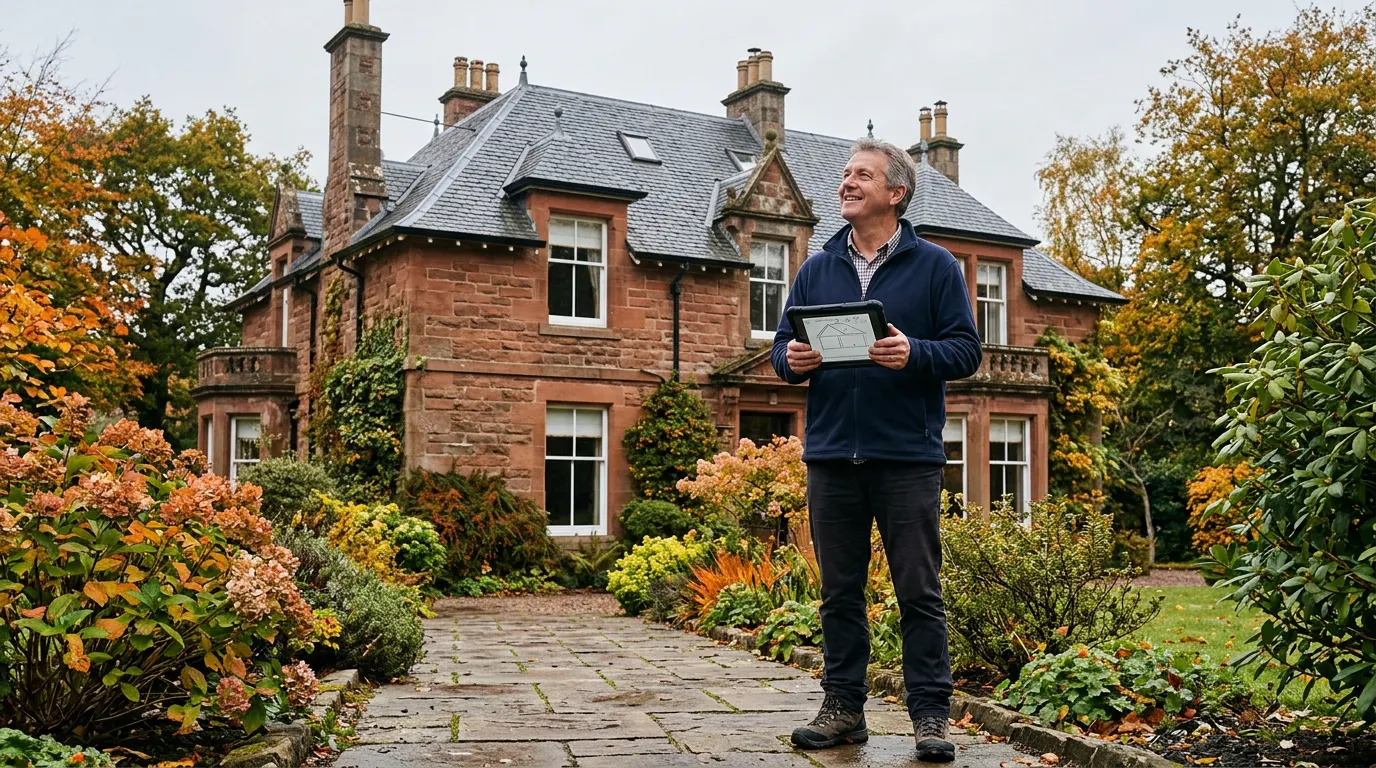
- We install through MCS-certified partners
- Interest-free credit up to £30,000, subject to status.
- Covers all of Scotland
Key facts
- Solar panels generate from daylight — they work on overcast days, not just in direct sun.
- 0% VAT on qualifying domestic solar and battery installations until 31 March 2027.
- Interest-free credit up to £30,000, subject to status.
- We install through MCS-certified partners.
- A battery is what makes solar worth it in Scotland — it stores daytime power for evening use.
- Most Glasgow houses do not need planning permission for solar.
- SP Energy Networks is the DNO for Glasgow — we handle the notification.
Last updated: 30 October 2026
How solar panels work in Scotland
- Solar panels generate electricity from daylight, not just direct sunlight — they produce power on overcast days.
- A south-facing roof generates the most, but east and west orientations are also viable in Scotland.
- Panel output is measured in kWp (kilowatt peak) — the maximum generation under standard test conditions.
- Generation is higher in summer than winter, but a correctly sized system produces meaningful output year-round.
- Shading from chimneys, trees and neighbouring buildings reduces output — assessed at survey.
Battery storage
- A battery stores daytime solar generation for evening use, which is when most households use the most electricity.
- A battery can also charge from the grid on a cheap overnight tariff and discharge at peak — no panels required.
- Battery capacity is measured in kWh. Size is matched to your evening usage and panel output at survey.
- A battery-only install works in flats and tenements with no roof access.
- Warranty terms, including capacity degradation, are set out on your written quotation.
Cost, VAT and finance
- There is 0% VAT on qualifying domestic solar and battery installations until 31 March 2027, under HMRC rules.
- There is no honest guide price without a survey — cost depends on system size, roof complexity, scaffolding and battery.
- Interest-free credit of up to £30,000 is available, subject to status and affordability. Terms and conditions apply.
- The price is the same whether you pay outright or use finance — no finance premium.
- Scaffolding, roof repairs and DNO fees should be listed on the quotation, not hidden as extras.
Installation and certification
- We install through MCS-certified partners — the installer is named on your written quotation and MCS certificate.
- An insurance-backed guarantee protects you if the installer ceases to trade — ask which scheme and for the registration number.
- The installation itself typically takes two to three days on site.
- Building standards for structural load, wind uplift and electrical safety apply even when planning permission is not needed.
- A written quotation should list system size in kWp, panel and inverter make and model, battery capacity, warranty terms and exclusions.
Grid connection and exports
- SP Energy Networks is the distribution network operator for Glasgow and the west of Scotland.
- For most domestic systems, connecting to the grid is a notification, not an application for approval — the installer handles it.
- The Smart Export Guarantee pays you for surplus electricity exported to the grid. Export rates vary by supplier and tariff.
- With a battery you export less because you store the surplus — self-consumption is usually worth more than the export payment.
- We confirm the current export rate and DNO position on your quotation.
Planning and property
- Most domestic solar on Glasgow houses is permitted development in Scotland — no planning application needed.
- Listed buildings need listed building consent, and conservation areas have reduced permitted development rights.
- Flats and tenements have more limited permitted development rights than houses.
- In a tenement, the roof is usually common property — all proprietors must agree under the title deeds.
- The Tenement (Scotland) Act 2004 sets defaults, but your title deeds can override them.
The one fact that matters most
There is no honest price, no honest payback figure and no honest suitability assessment without a survey of your actual roof. Everything else on this page is context. The survey is where the facts meet your home.
Get a free survey and quoteHave more questions? See our full questions page on the Scottish Energy Efficiency network.
Want these facts applied to your home? Talk to us.
Get your quote
How do you get a written solar quote?
Fill in the form. We call back to book a survey, then you get a written quotation. Six fields, no obligation, and we say if the roof is not yours.
Survey first, quotation second — never a guess
MCS-listed equipment, confirmed in writing
Interest-free credit up to £30,000, subject to status.
Last updated: 30 October 2026
Reviewed by the Scottish Energy Efficiency team