Solar battery storage Glasgow

Solar battery storage in Glasgow — is it worth it?

Quick answer

For most Glasgow homes a battery is worth considering, because it stores daytime solar power for the evening when you use the most electricity. It can also charge on a cheap overnight tariff, which is why a battery on its own still works in a flat with no roof rights. Your survey confirms the right size.

We install through MCS-certified partners

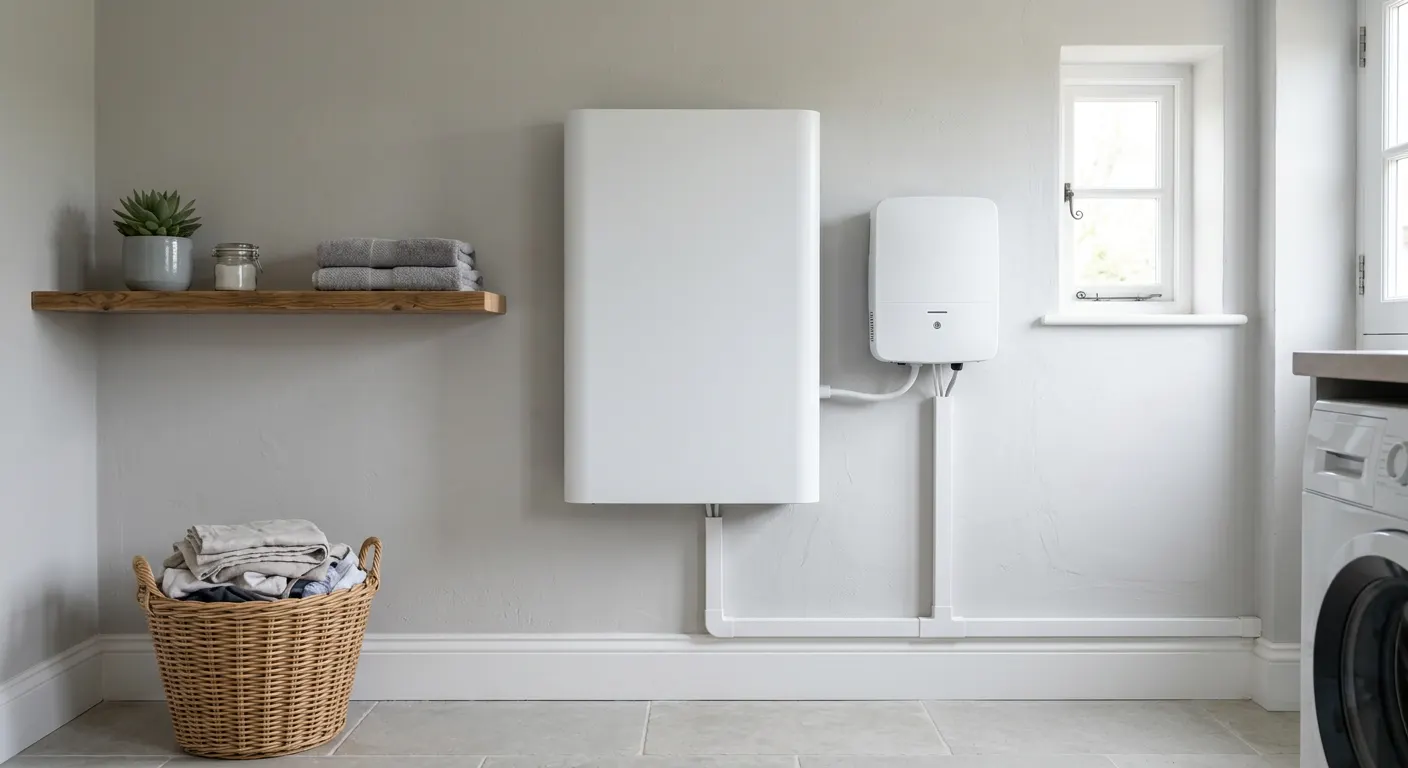
A white wall-mounted home battery and inverter in a tidy utility room

Key facts

  • A battery stores daytime solar power for evening use — when electricity is most expensive.
  • A battery-only install works in flats with no roof rights — it charges from the grid overnight.
  • Battery size is matched to your evening usage and panel output at survey — not picked off a shelf.
  • Most Glasgow households use the bulk of their electricity between 5pm and 10pm.
  • Interest-free credit up to £30,000, subject to status.
  • We install through MCS-certified partners.
  • Warranty terms, including degradation, are set out on your quotation.

Last updated: 30 October 2026

How does a battery work with solar panels?

A battery stores the electricity your panels generate during the day and releases it when you need it in the evening. Without a battery, surplus power goes to the grid for a small export payment. With one, you use that power yourself, which is worth more.

In practice the battery sits between your panels and your consumer unit. It charges when the panels are producing more than the house is using, and discharges when the panels are not keeping up. Most systems also let you charge the battery from the grid overnight on a cheap tariff, so you can buy low and use later.

The short version

Panels make power in the day. You use most of it in the evening. A battery bridges that gap, so you buy less from the grid when prices are highest.

Why does a battery matter more in Glasgow than in sunnier places?

Glasgow has more overcast days than most of the UK, so generation is more variable. A battery smooths that out — it stores surplus from a bright morning and carries it through a dull afternoon, so your self-consumption is higher and your grid use lower than a panel-only system.

Generation also peaks in the middle of the day when most people are out. Usage peaks in the evening. That mismatch is exactly what a battery fixes. Without one, a Glasgow home exports cheap at midday and buys expensive at seven in the evening.

Can you have a battery if you do not own the roof?

Yes. A battery on its own works in a flat or tenement where you cannot put panels on a shared roof. You charge it from the grid on a cheap overnight tariff and discharge it during peak hours. No roof rights required, no panels, still a real saving on peak electricity.

This is the honest answer for a lot of Glasgow households. If the title deeds will not let you install on the shared roof, or the other proprietors will not agree, panels are off the table — but a battery is not. It lives inside your own property and needs no access to the roof.

How is the right battery size chosen?

Battery size is matched to your evening usage and your panel output, not picked off a shelf. Too small and you still buy peak electricity; too large and you have paid for capacity you never fill. We size it from your actual usage at survey.

A typical Glasgow household uses most of its electricity between five and ten in the evening. The battery needs to cover that window from stored generation or cheap overnight charge. We look at your usage profile and your panel output, and we size the battery so it pays for itself rather than sitting half-empty.

How does a battery reduce peak-hour grid use?

By discharging stored power between roughly four and nine in the evening, when grid electricity is at its most expensive. You draw from the battery instead of the grid, so the units you use at peak cost you what you paid to store them — often a fraction of the peak rate.

On a time-of-use tariff this is the biggest single saving a battery offers. The exact figure depends on your tariff and your usage, which is why we confirm it on your quotation rather than quoting a percentage here.

How does the Smart Export Guarantee fit with a battery?

The Smart Export Guarantee pays you for surplus electricity you export to the grid. With a battery you export less, because you store the surplus instead. Whether SEG or self-consumption is better depends on your tariff — usually self-consumption wins.

Export rates vary by supplier and tariff. The power you avoid buying at peak is usually worth more than that, which is the argument for a battery in the first place.

FAQ

Battery storage — your questions

Can I add a battery later if I already have panels?

Usually yes, provided your inverter is compatible or you add a battery inverter. We check at survey whether your existing setup can take a battery or needs an upgrade. Either way you get a written quotation before any work.

How long does a battery last?

Warranty length and cycle rating vary by battery model, and your quotation names the model and its manufacturer warranty. Capacity slowly reduces over time. We set out the warranty terms, including degradation, on your quotation.

Does a battery work during a power cut?

Only if the system is set up for islanding, and not all are. A standard battery shuts down with the grid for safety. If backup power matters to you, tell us at survey and we quote a system that can run independently.

Can I have a battery in a flat?

Yes. A battery on its own needs no roof access and no panels, so it works in a tenement or flat where the roof is shared. You charge it from the grid on a cheap tariff and discharge at peak. The roof is not your problem.

Is battery storage noisy?

No. A domestic battery has a small inverter fan, comparable to a quiet fridge, and is usually sited in a cupboard or utility room. At survey we talk through where it can go and what to expect.

Prefer to talk? We are on the phone and WhatsApp.

More questions about battery storage? See our full questions page on the Scottish Energy Efficiency network.

Get your quote

How do you get a written solar quote?

Fill in the form. We call back to book a survey, then you get a written quotation. Six fields, no obligation, and we say if the roof is not yours.

Survey first, quotation second — never a guess

MCS-listed equipment, confirmed in writing

Interest-free credit up to £30,000, subject to status.

By submitting this form you agree to be contacted about your enquiry. Solar Quotes Glasgow is a trading name of Scot Energy Efficiency Ltd, company number 17408629, registered office 66 Paul Street, London EC2A 4NA. See our privacy policy.

No obligation · We install through MCS-certified partners · Scottish homes and businesses

Before you ask

What are the four quick questions about getting a quote?

Do you install in Glasgow?

Yes. We arrange solar panel and battery installations across Glasgow and the G postcode area, including East Dunbartonshire, East Renfrewshire and North Lanarkshire. We install through MCS-certified partners, and the survey confirms your roof is suitable before any quotation is written.

Can I add a battery to my existing solar panels?

In most cases, yes. A battery can usually be added to an existing solar PV system, either alongside your current inverter or with a replacement hybrid inverter. At the survey we check your inverter, consumer unit and space, then confirm the right option in writing.

Is finance available?

Interest-free credit up to £30,000, subject to status. If you would like to spread the cost, tell us when we call and the credit options are set out alongside your written quotation, so you can compare them before deciding.

How do I get a quote?

Call 0141 230 0198 or fill in the quote form. We call you back within one working day to book a survey of your roof. After the survey you receive a written, no-obligation quotation with the system size, battery capacity and expected generation set out clearly.

Last updated October 2026

Reviewed by the Scottish Energy Efficiency team